Brief the Team Before the Headline: The Case for an Internal Press Release
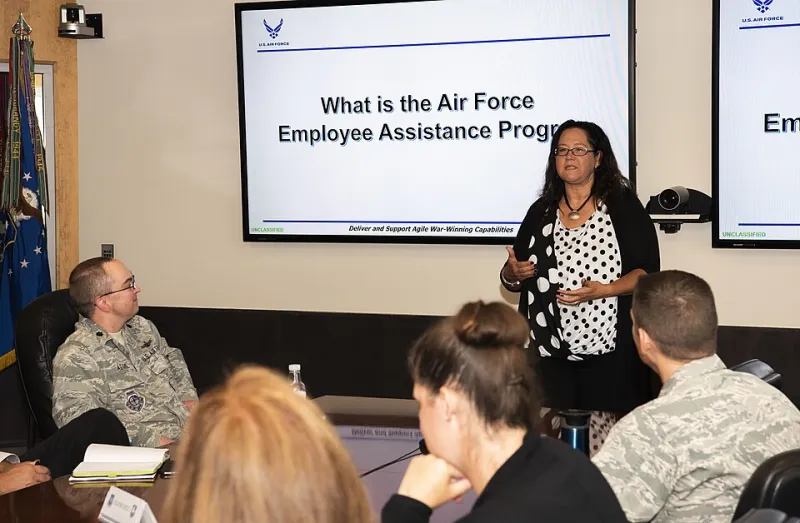
Photo: U.S. Air Force photo by Staff Sgt. Matthew Coleman-Foster, Public domain, via Wikimedia Commons
Every major announcement follows a familiar choreography. The communications team drafts the release, legal reviews it, the executive team approves it, and the market hears the news at a carefully chosen hour. Somewhere in that sequence, employees are often handed a summary or a link. Sometimes they learn the news from the same social feed as everyone else. The company has spent weeks polishing the external message and minutes preparing the people who will have to live with it.
This is not a small oversight. It is a communications failure with a long tail. Employees are the first audience a brand must persuade, not the last to be informed. Before the headline reaches customers, investors, or reporters, it should survive a simpler test: can the people inside the organization explain it clearly, honestly, and without fear?
The First Audience Is Not the Market
Employees are not a distribution channel, although they often function as one. They are the people who answer the phone, staff the booth, ship the order, and sit across from the customer at renewal time. When they understand an announcement, they can reinforce it. When they do not, they improvise. Improvisation in a vacuum produces speculation, and speculation travels faster than any approved talking point.
The internal audience is also a credibility test. Employees can tell whether a message matches the decisions they have already seen. They notice when a release celebrates growth while teams are being asked to do more with less. They notice when a new strategy is announced without any change in priorities. A message that cannot survive internal scrutiny is unlikely to survive external scrutiny for long.
What the Internal Press Release Does
An internal press release is not a leak of the external one. It is a parallel document written for a different reader. Its purpose is to brief managers and employees before the public announcement, give them context, and reduce the chance that they will be blindsided by a headline.
It should answer the questions a reasonable employee would ask: What is happening? Why now? Who is affected? What is not changing? What should I say if a customer or a friend asks? Where do I send questions? The document does not need to be long. It needs to be direct. Corporate euphemism is the enemy here. If the news involves a reorganization, say so. If some details are not final, say that too, and say when they will be.
Sequence Matters More Than Spin
The most common mistake is timing. Companies brief managers and employees at the same moment they publish the external release, then wonder why the internal message feels like an afterthought. A better sequence is simple: brief the people who must answer questions before the people who will ask them. Managers should hear first, with enough time to prepare. Employees should hear before the public does, unless legal or regulatory constraints make that impossible. If simultaneous release is unavoidable, the internal explanation should still be ready before the external one goes live.
Tone matters as much as sequence. Employees do not need a rallying cry. They need accurate information, a clear sense of what is expected of them, and permission to say they do not know when they do not know. A briefing that pretends certainty in an uncertain situation teaches people to distrust the next briefing.
A Simple Internal Press Release Template
Use the same discipline you apply to external communications, but write for the people inside the building.
- Headline: State the news in plain language. Avoid internal code names and aspirational abstractions.
- What is happening: Explain the change in three sentences or fewer.
- Why now: Give the business reason without jargon. If the reason is competitive pressure, say so. If it is a customer shift, name it.
- Who is affected and how: Be specific about teams, roles, customers, and timelines.
- What is not changing: Name the stable elements. This reduces unnecessary anxiety and rumor.
- What employees should say if asked: Provide two or three approved lines in natural language.
- What employees should not say: Identify confidential details, speculation, or comments that could create legal risk.
- Where to route questions: Name a person, channel, or office. Do not send people to a generic inbox that no one monitors.
- Timeline and next update: Say when more information will arrive, even if the answer is not yet available.
Q&A Preparation Is Part of the Message
Managers need more than a summary. They need practice with the questions employees will actually ask. Prepare a short Q&A with ten likely questions: Will there be job changes? What does this mean for my team? How will customers be affected? What should I tell clients? Is this reversible? What happens next week? The answers should be honest, consistent, and short. Where the answer is unknown, the response should say what is known, what is not, and when it will be.
This preparation is not about scripting people. It is about giving them enough context to avoid guessing. A manager who has to improvise an answer in a hallway is not communicating strategy. They are managing uncertainty in public.
The Trust Cost of Finding Out Last
When employees learn company news from a headline, they draw a reasonable conclusion: the organization did not trust them enough to prepare them. That conclusion is expensive. It shows up in engagement surveys, in referrals, and in the willingness of employees to defend the brand when it is criticized. It also weakens the external message. Reporters and customers often ask employees what they think. If the answer is that they found out on social media, the announcement has already lost credibility.
The cost is not hurt feelings. It is message integrity. A brand that cannot brief its own people cannot expect them to carry its story.
Make It Routine
Add the internal press release to every announcement checklist. Draft it alongside the external release, not after it. Give managers time to prepare, give employees a clear channel for questions, and review what worked after the announcement lands. The goal is not to control the internal conversation. It is to make sure the first conversation is informed. Employees should never learn their company's news from a headline. They should learn it from a briefing that treats them as the first audience they are.